What structural problems do older St. Louis brick houses have?
Many pre-war St. Louis houses are solid brick on stone or brick foundations, and the common issues are cracked or bulging walls, failing lintels, loose parapets and chimneys, and deteriorated mortar. Most develop slowly, so catching them early matters.
Age alone is not a defect. These houses are durable when the masonry is kept dry and the mortar is maintained.
What do stair-step cracks mean?
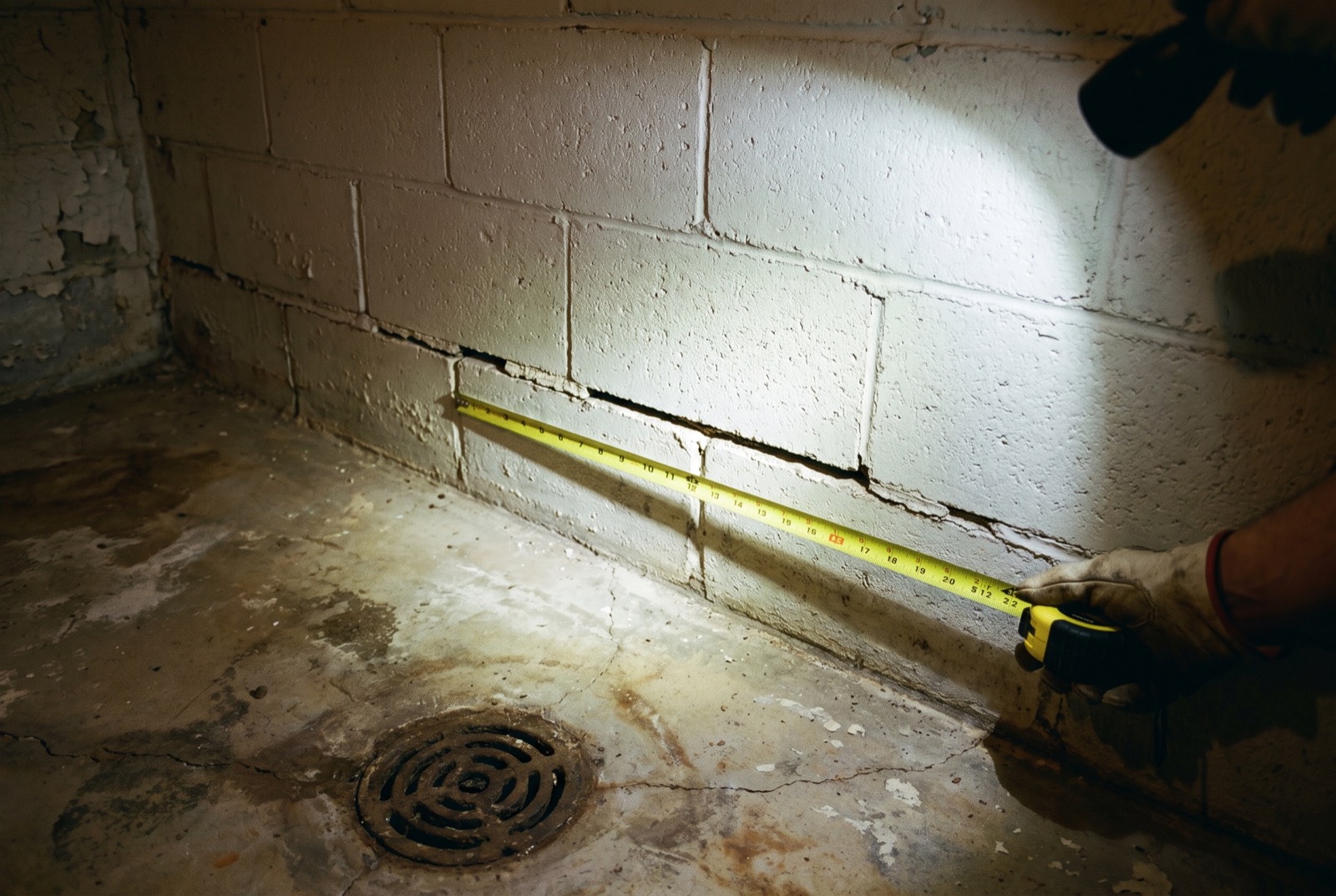
Stair-step cracks follow the mortar joints up the wall. They often indicate that part of the wall has moved, usually from settlement, soil movement or water damage. St. Louis has expansive clay that shrinks in dry summers, which can leave part of a foundation unsupported.
A thin, old crack that has not changed may be stable. A crack that is wider, newer or growing needs evaluation. See foundation cracks: which ones matter.
What does a bulging brick wall mean?
A wall that bows outward may have separated layers. Solid brick walls are several layers (wythes) tied together, and if the ties or mortar fail, the outer layer can pull away. This can be a safety issue, particularly on a street-facing wall. If you see bulging, keep people away from below and get it assessed.
Why do lintels fail?
A lintel is the beam over a window or door. Older ones are often steel angles or stone. Steel rusts and expands, which cracks the brick above and pushes it out. Signs include a bent or sagging line above an opening and cracks fanning out from the corners.
What about parapets, chimneys and cornices?
These sit exposed to weather, and the mortar breaks down over time.
- Parapets, the low wall at the roofline, can lean or loosen.
- Chimneys can lean, lose mortar or shed bricks, especially above the roof.
- Brick or decorative cornices can separate from the wall.
Anything at height that can fall is a priority. If something looks loose, stop and call before anyone works underneath it.
What should you check on a stone foundation?
Stone and old brick foundations often have soft mortar and are more prone to moisture. Watch for loose stones, crumbling mortar, bulging, or damp walls. Repair choices depend on the actual condition, so avoid applying patches or sealers before an engineer has looked. See bowing basement wall.
How does an engineer evaluate old masonry?
We look at the wall from outside and inside, note crack patterns and moisture, and explain what is stable and what is not. Our brick masonry evaluation service is designed for this. The fee depends on scope and is confirmed before the visit.
What should you send us?
Send the address and a few photos of the cracks, walls and rooflines of concern. We reply within one business day.