Foundation inspection by a structural engineer.
Cracks, bowing or leaning walls, settlement, and sloping floors.
Request this service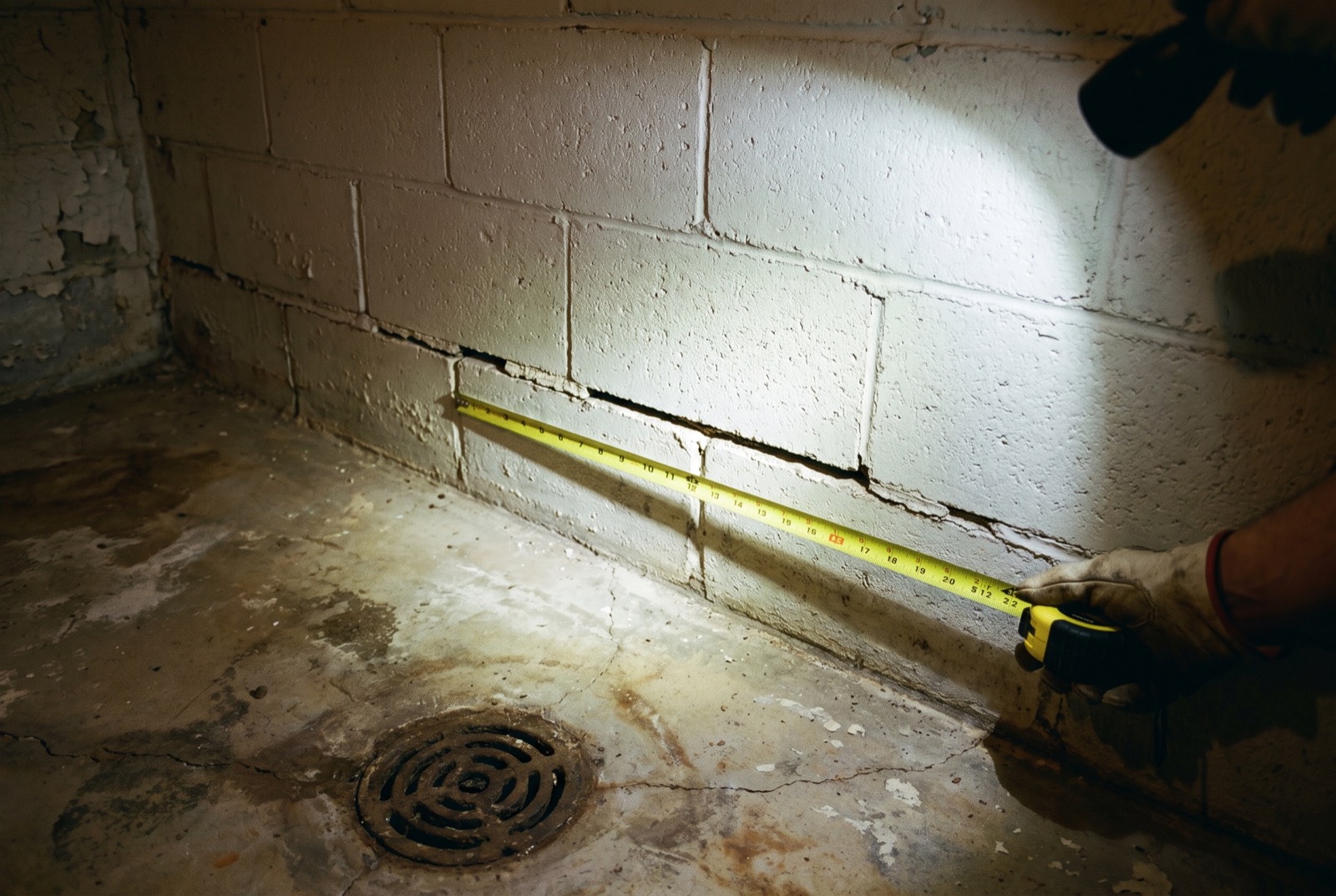
Who should look at a foundation crack?
A structural engineer, before a repair company. The engineer tells you what caused the crack and whether it needs repair at all, and has nothing to sell you either way.
When you need it
- A horizontal crack or a wall that bows inward
- Stair-step cracks in block or brick
- A crack that is wider at one end or keeps growing
- A repair company gave you a large quote and you want a second opinion
- A buyer, lender, or inspector asked for an engineer
- 1Soil pushing on the wall
- 2Horizontal crack where the wall bends
- 3Footing
What the engineer looks at
- The crack itself: direction, width, whether one side has moved past the other
- The wall: plumb, bowed, sheared at the bottom course, or tipped at the top
- Floors and framing above for slope, sag, and separations
- Grading, downspouts, and trees that load or dry out the soil
- Earlier repairs, and whether they are still doing their job
What you get
- A written report signed by a licensed Professional Engineer
- The likely cause, in plain words
- Whether to repair, monitor, or leave it alone
- A repair scope a contractor can bid, when repair is needed
Common questions
Do all foundation cracks need repair?
No. Thin vertical cracks in poured concrete are usually shrinkage and often need nothing more than sealing against water. The report says which kind you have.
Can I get the report before I talk to repair companies?
Yes, and that is the better order. With a written scope in hand, every contractor bids the same repair and you can compare them.
Will you tell me if the house is safe to live in?
The report states what the engineer observed and how serious it is. If something needs attention right away, you are told on site, not weeks later.
Read first
Foundation cracks: which ones matterHow to tell a harmless shrinkage crack from one that signals foundation movement.
Bowing basement wall: what it means and what to doWhat causes a basement wall to bow inward and how an engineer decides what to do.
Structural engineer vs foundation repair companyWhy an independent engineer's opinion differs from a quote from a company that sells repairs.