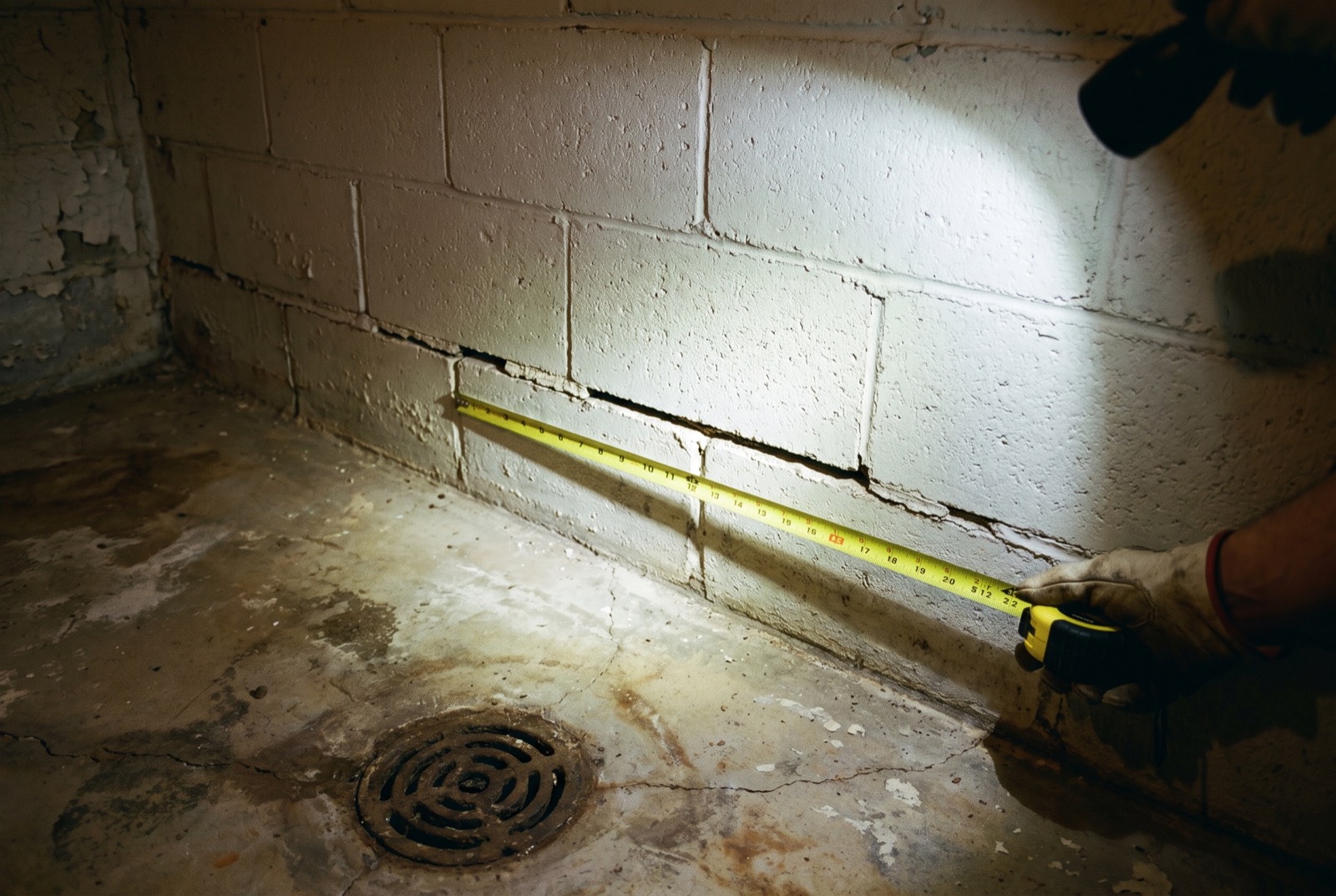
Which foundation cracks should you worry about?
Cracks that are wider at one end, run horizontally, or show one side of the wall sitting out of line with the other deserve a professional look. Thin vertical cracks in poured concrete are often just shrinkage from curing and are common in houses of every age.
What does a harmless crack usually look like?
Poured concrete shrinks as it cures, and that often leaves a hairline crack running roughly straight up and down. These are common and often stay the same for decades.
Signs a crack is more likely cosmetic:
- It is very thin and roughly vertical.
- Both sides of the crack are flush with each other.
- It has not grown or changed shape over several seasons.
Even a stable crack can let water in, which is a moisture question more than a structural one.
What cracks suggest real movement?
Some patterns point to the soil or the wall itself shifting.
- Horizontal cracks in a block wall, often about halfway up, can mean lateral soil pressure is pushing the wall inward. See our guide on a bowing basement wall.
- Stair-step cracks that follow the mortar joints in block or brick suggest uneven settlement or pressure.
- A crack that is wider at the top than the bottom, or the reverse, can mean one part of the foundation is moving relative to the rest.
- One side of a crack sitting proud of the other.
Why do St. Louis foundations crack?
Much of our area has clay soil that swells when wet and shrinks in dry summers, which can open cracks and push on walls. Older houses often have stone or brick foundations with aging mortar.
How can you track a crack yourself?
You can watch a crack without touching the structure. Take dated photos with a ruler or coin beside the crack, and photograph it from the same spot each season.
Do not fill or patch the crack before an engineer sees it, since that can hide the evidence of whether it is still moving.
When should you stop and call someone?
Call promptly if a crack has appeared suddenly, if a wall is visibly leaning, if a crack is growing week to week, or if the floors above have started to slope. If you notice any of those, keep people away from the area until it has been looked at.
An engineer can inspect the foundation in person, explain what is happening and say whether any repair is needed. We do not sell repairs, so the opinion is independent. The difference is covered in structural engineer vs foundation repair company. Our foundation inspection service is where to start.
What should you send us?
Send the address and a few photos. Include a ruler for scale. We reply within one business day.